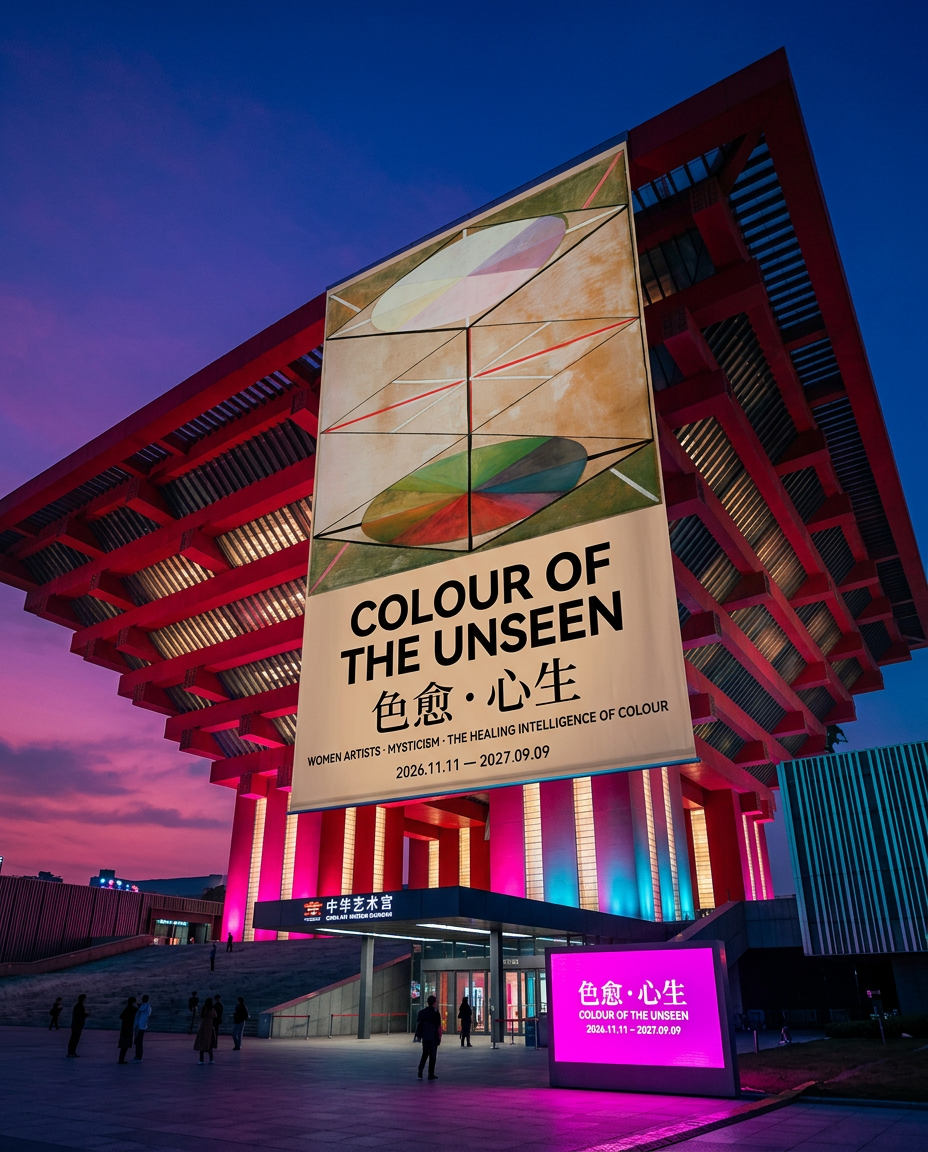
A THREE-FIELD EXHIBITION
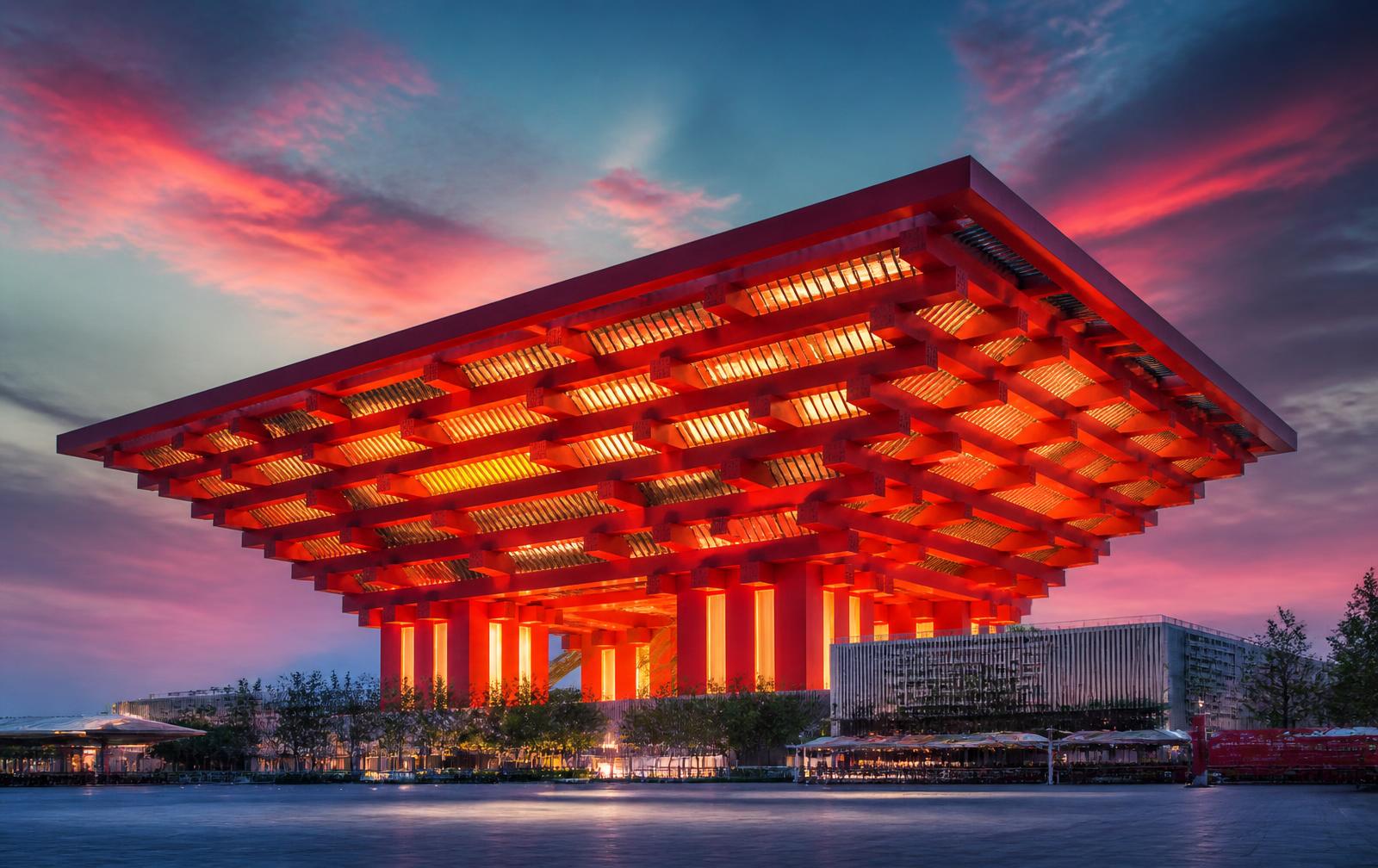
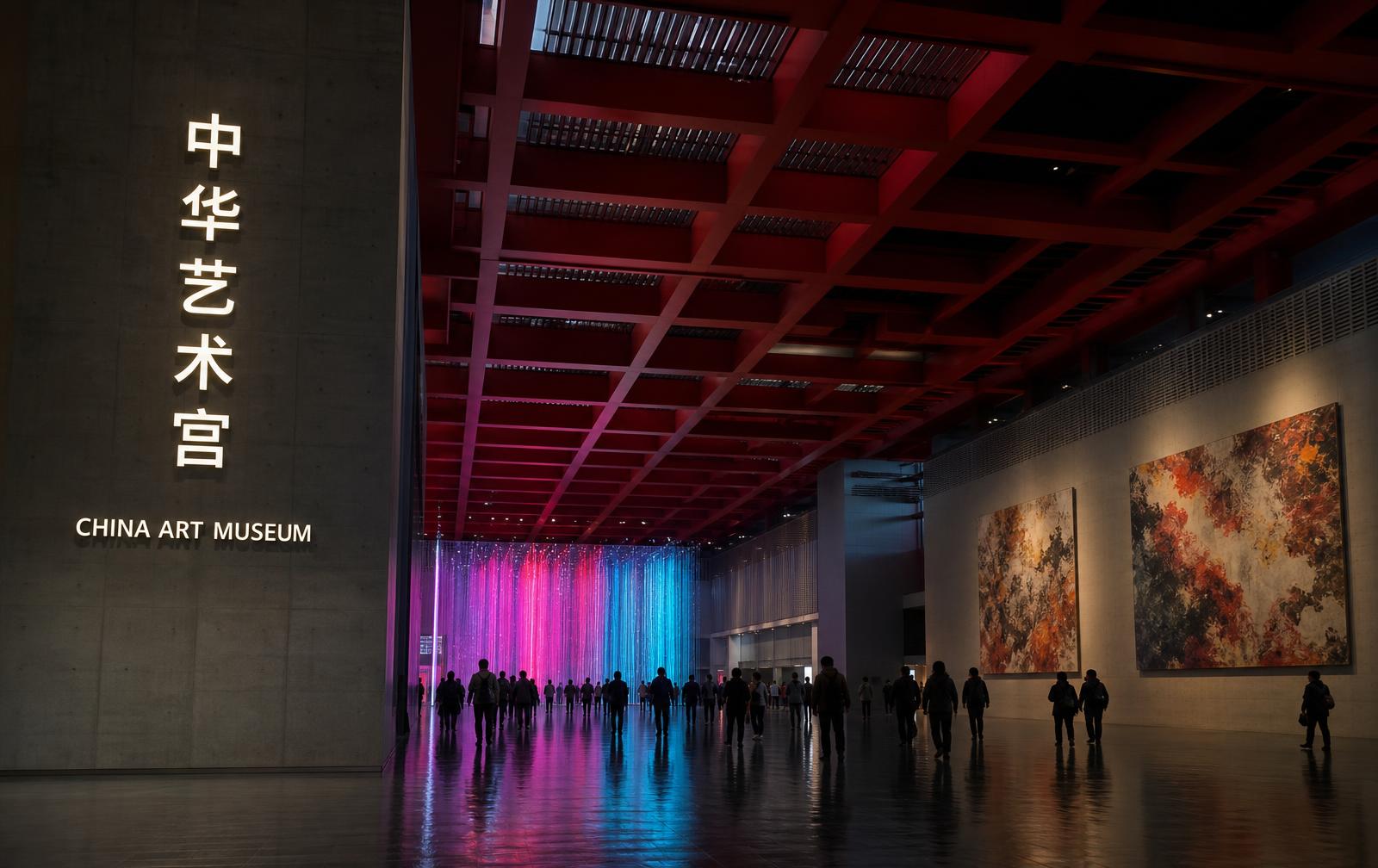
2026.11.11 — 2027.09.09 · CHINA ART MUSEUM, SHANGHAI
色愈 · 心生COLOUR OF THE UNSEEN
Women Artists, Mysticism and the Healing Intelligence of Colour
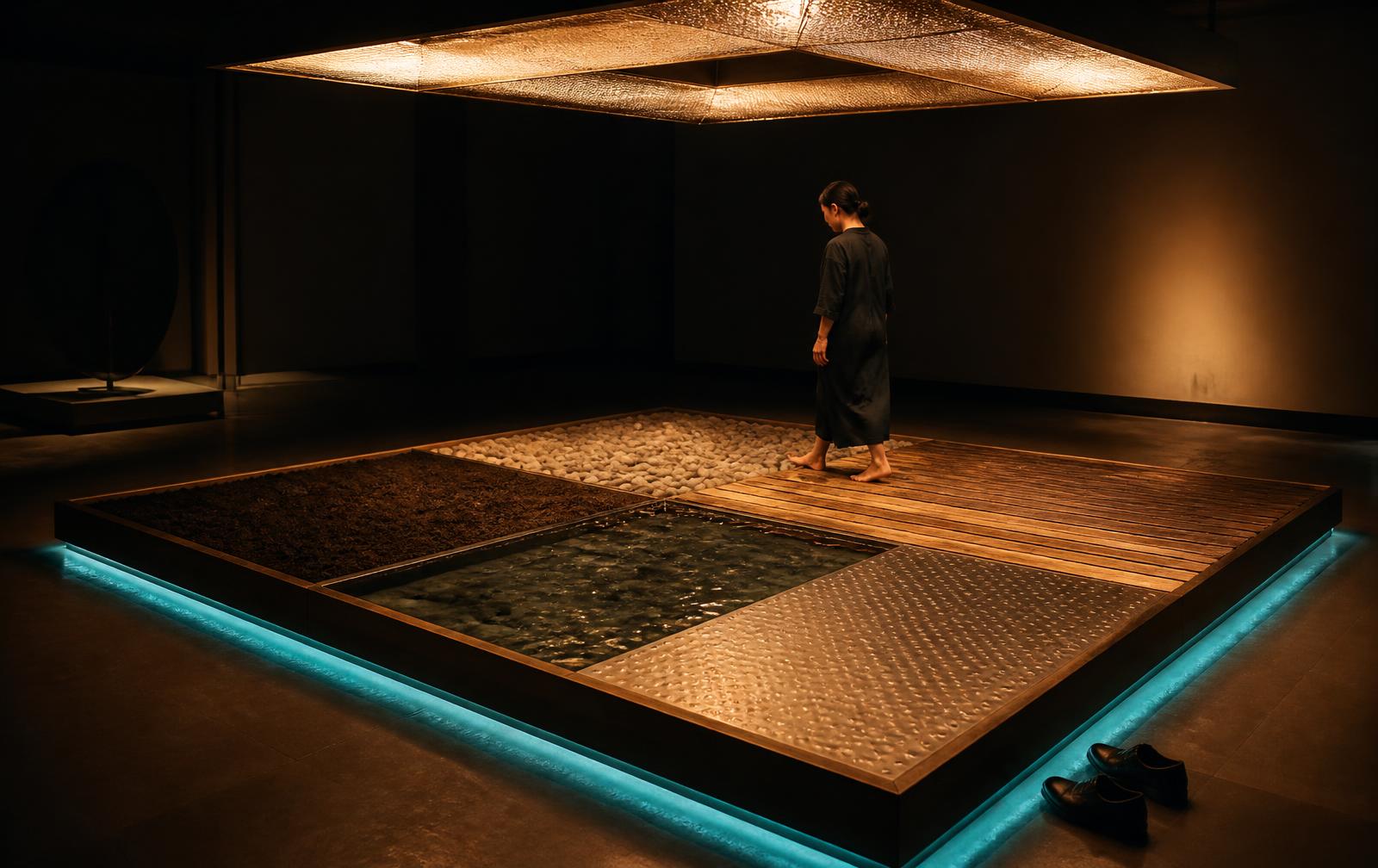
Abstraction not only as the reduction of visible reality, but as the visualization of invisible reality.
What if colour is not something we see, but something through which we perceive?
MASTER PROPOSITION
WE ARE THE TECHNOLOGY WE ARE WAITING FOR.
Technology help us notice the world that are already happening within us. The human perceptual system is the starting point of the meaning. What if we can revisit the world of colours through the eyes of artists, while animate the art through not only the eyes, but the entire body as the most advanced sensing technology. heartbeat signal. Breath signal. Attention signal. Intuition signal. Memory signal... explore the wonder is within & without.
EXHIBITION × LIVING LAB × RESEARCH PROGRAM
Three overlapping fields
CURATORIAL JOURNEY
Five Chapters
Five chapters. The exhibition as a perceptual journey.
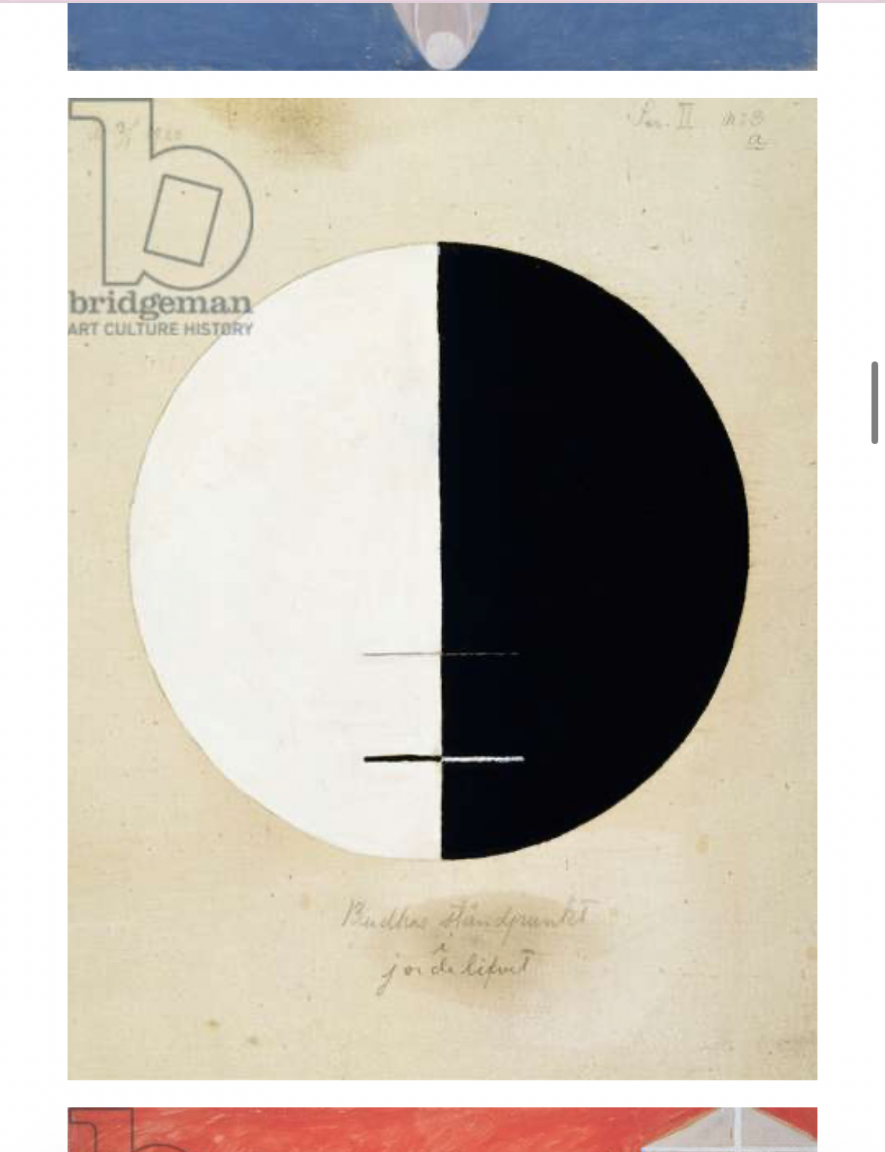
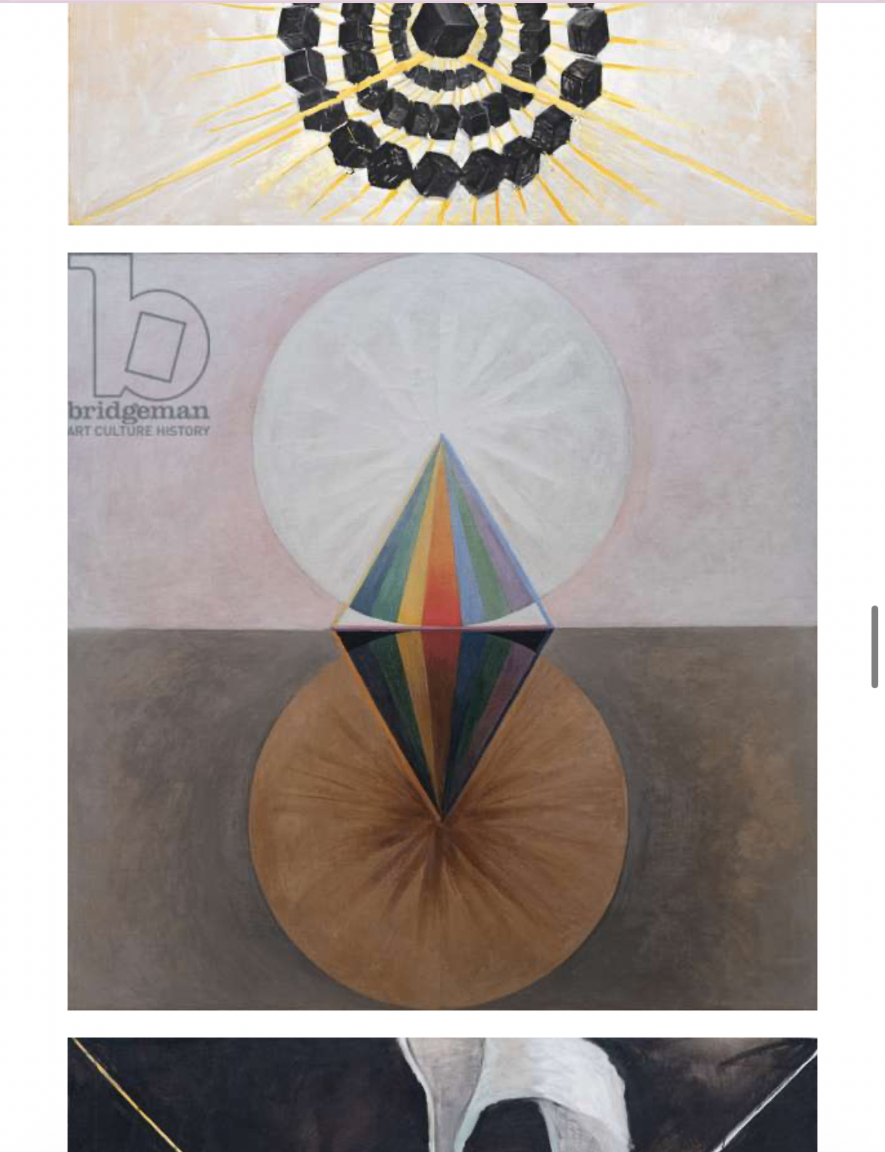
Hilma af Klint — preview, Bridgeman Images
RECEIVING
The Artist as Instrument
Georgiana Houghton · Hilma af Klint · Anna Cassel
Creation does not always begin with conscious intention.
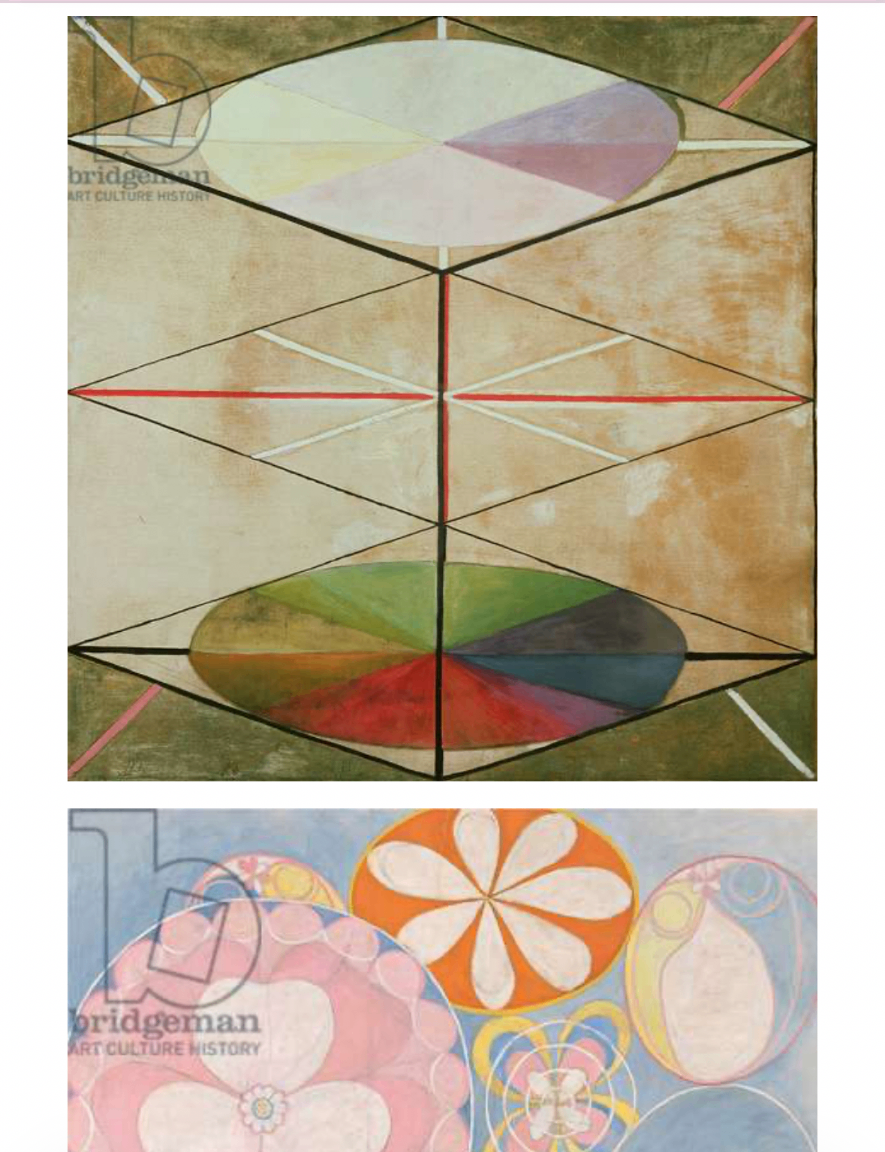
Hilma af Klint — preview, Bridgeman Images
MAPPING
Geometry of the Invisible
Hilma af Klint · Emma Kunz
Form given to relationships that cannot otherwise be seen.
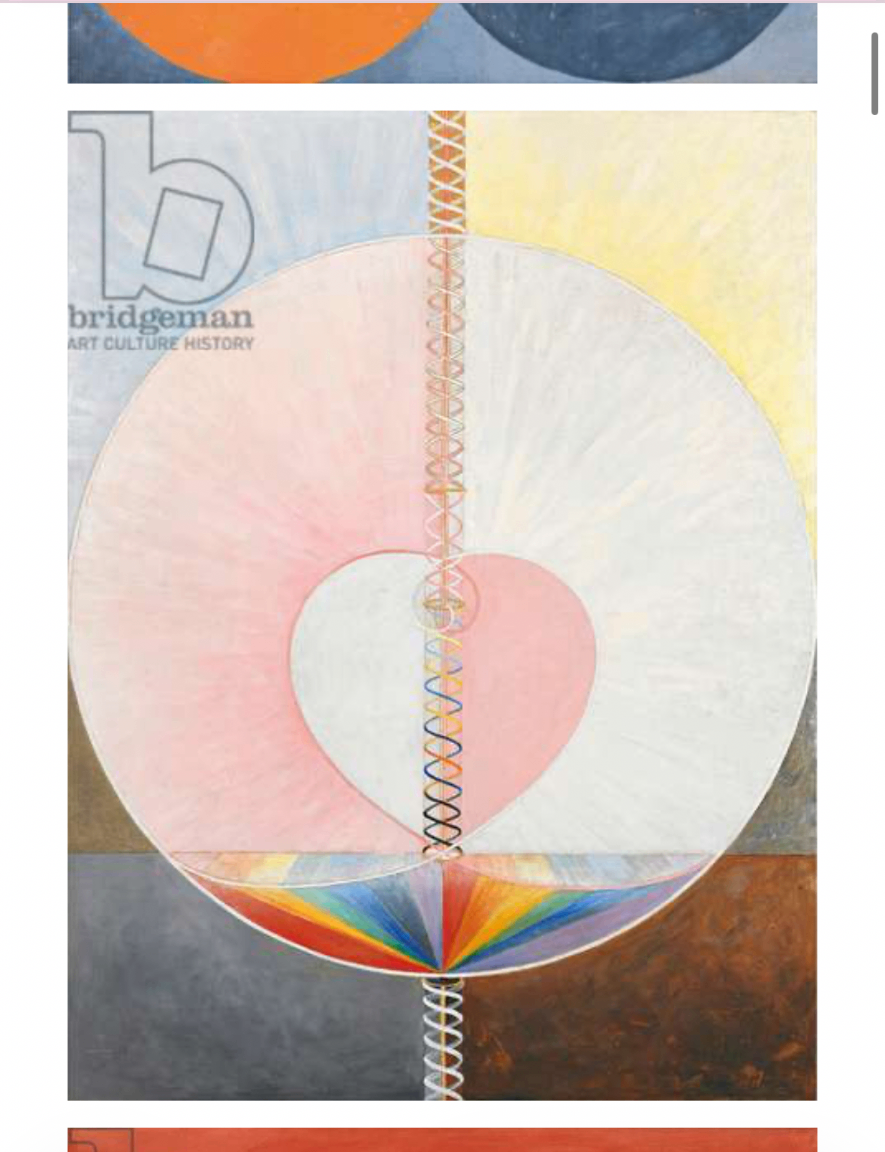
Hilma af Klint — preview, Bridgeman Images
VIBRATION
Colour as Energy
Emma Kunz · Agnes Pelton · Hilma af Klint
Colour leaves the surface of the painting and enters the body of the viewer. HEALING ≠ CURE. Colour is relationship.
HEARTECHLAB
From looking to contemplating.
HOW DOES ART CHANGE STATE OF CONSCIOUSNESS?
HOW CAN TECHNOLOGY SUPPORT US SHARPEN THE SENSES AND PERCEIVE WELL ENOUGH TO COPE WITH CHANGES? AKA. HEALED?
Journey of art of healing
Colour experience emerges through interaction between physical light, nervous system, memory, culture, expectation and context. In this curated space, the visitor experiences an artwork. The body responds. Sensors capture signals. AI identifies patterns. Those patterns are translated into colour, light, sound or generative visual environments. The visitor then experiences an environment partially shaped by their own physiological state.
WHY NOW?
MACHINES ARE LEARNING TO SEE.
WHAT MUST HUMANS LEARN TO PERCEIVE?
AI can increasingly recognise, classify and generate the visible. This makes another human capacity newly important: intuition, embodied knowledge, attention, inner experience, relationship, meaning. The historical women in this exhibition were investigating these territories long before contemporary language around embodied intelligence, consciousness research and AI emerged.
What becomes visible when we learn to perceive differently?
WE ARE THE TECHNOLOGY WE ARE WAITING FOR.
Technology does not replace perception. It can help us return to it.